
1934-1939
In 1934-1935, the League found a new home by securing club rooms in the Chase Building, finally giving them a dedicated space to grow and collaborate. That year featured The Steadfast Tin Soldier, as the major production, a standout performance that highlighted the League’s artistic ambitions. They also staged Little Red Riding Hood, their first show featuring children in the cast – a fun and memorable milestone. Throughout the year, a variety of small fundraising projects helped support their expanding activities within the community.
The following League year, 1935-1936, brought important changes. The traditional hour system was replaced by a new placement system for civic work, offering a more efficient way to organize volunteer efforts. Work with Handley School began, marking an expansion of their community outreach. A major development came on January 1, 1936, when the First Ward Community Center became the First Ward Community Service, with the Welfare League taking on both the management and partial financial responsibility. The year’s major production, Aladdin, brought a touch of magic and wonder to the stage.
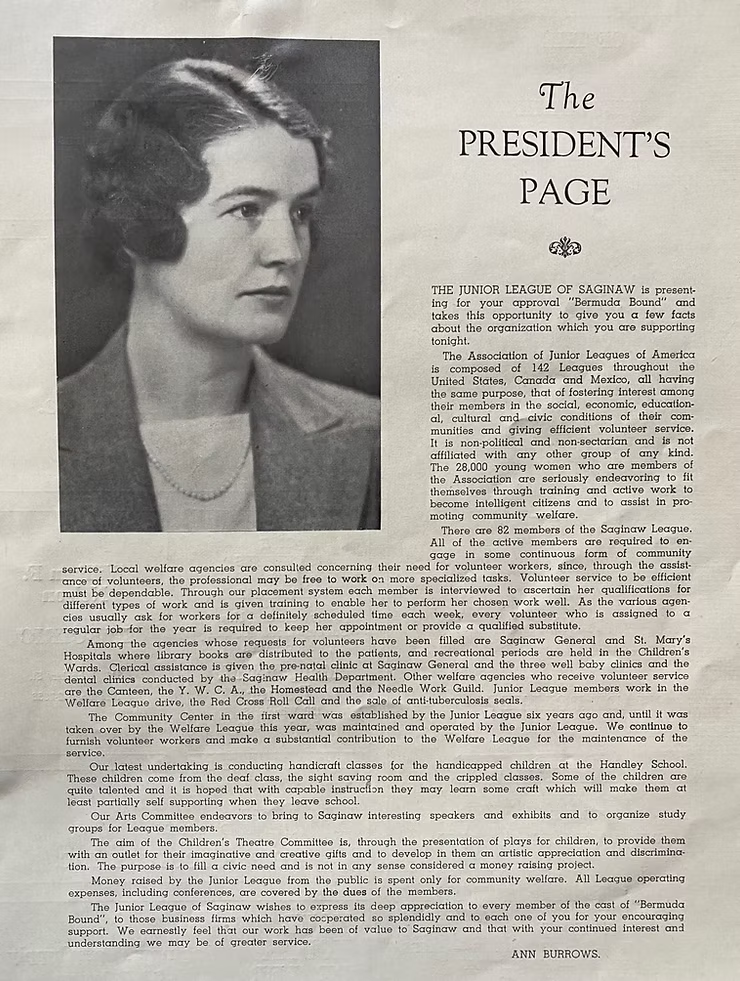
In 1936-1937, the programs at Handley School continued to grow with the introduction of weaving, adding a creative, hands-on activity for students. Additionally, a member was selected to represent the Junior League on the newly formed Council of Social Agencies, marking a step forward in community collaboration. On stage, children once again took the spotlight on in productions of The Duel and Little Black Sambo, continuing the tradition of youth participation. The season closed on a high note with the Follies production, Bermuda Bound, which proved to be a lively and well-received event.
In 1937-1938, the League took on a new role as the distributing agency for toys purchased through the Melville D. Brooks’ Fund, helping bring joy to local children. The children’s theatre presented the Pinocchio Ballet, with tickets made available for sale in local schools which proved to be a great way to engage young audiences and involve the community.
The momentum continued in 1938-1939, starting with another successful Follies production, Bermuda Bound. This year also marked several exciting firsts for the Junior League of Saginaw. In January 1939, the League hosted its first art exhibit, a two-week show held at the clubrooms of the Chase Building. The exhibit aimed to acquaint the public with recent advances in modern art and to provide a comprehensive look at Impressionist and Post-Impressionist movements.
The League also launched its first full children’s theatre series, which included two performances presented through Junior Programs as well as the League’s own production of The Emperor’s New Clothes. Capping off an eventful year, the League opened its very own Thrift Shop at 112 North Hamilton Street on April 1, 1939—an initiative that would grow into a cornerstone of its fundraising and community outreach efforts for decades to come.
To support the growth and effectiveness of its membership, a Field Representative from the Association of Junior Leagues of America conducted a five-day training course for new members, helping to build a strong foundation of leadership, service, and League values.